Corporate Event Management vs Wedding Planning
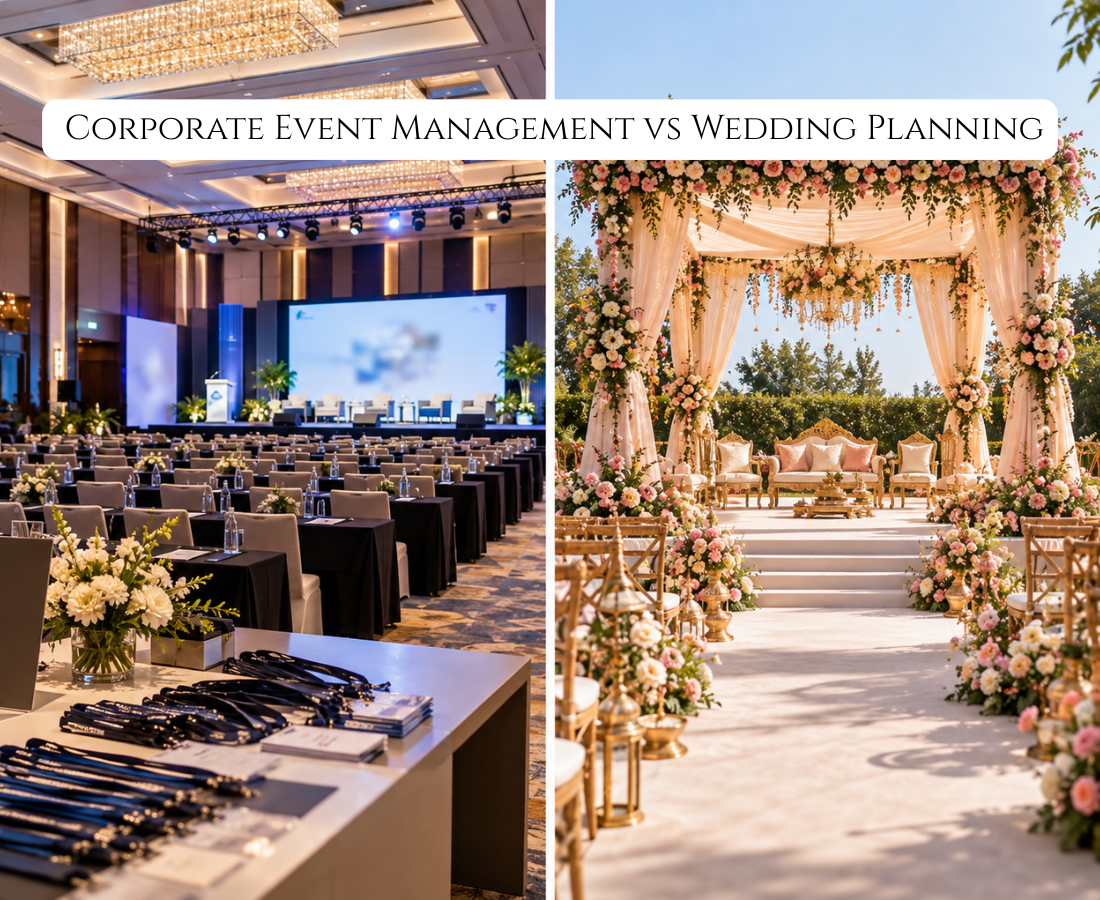
On the surface, weddings and corporate events look similar — a venue, a guest list, catering, décor, and a timeline holding it all together. But anyone who has managed both knows they’re fundamentally different disciplines. Corporate event management is measured in objectives, ROI, and attendee outcomes; wedding planning is measured in emotion, family dynamics, and once-in-a-lifetime moments. This guide breaks down exactly how the two differ across scope, logistics, budgets, and goals — and why the distinction matters when you’re choosing who to work with.
Related: Explore Our Full Wedding Planning Services
The Core Difference: Purpose Drives Everything

Every other difference between corporate event management and wedding planning flows from one thing: why the event exists at all.
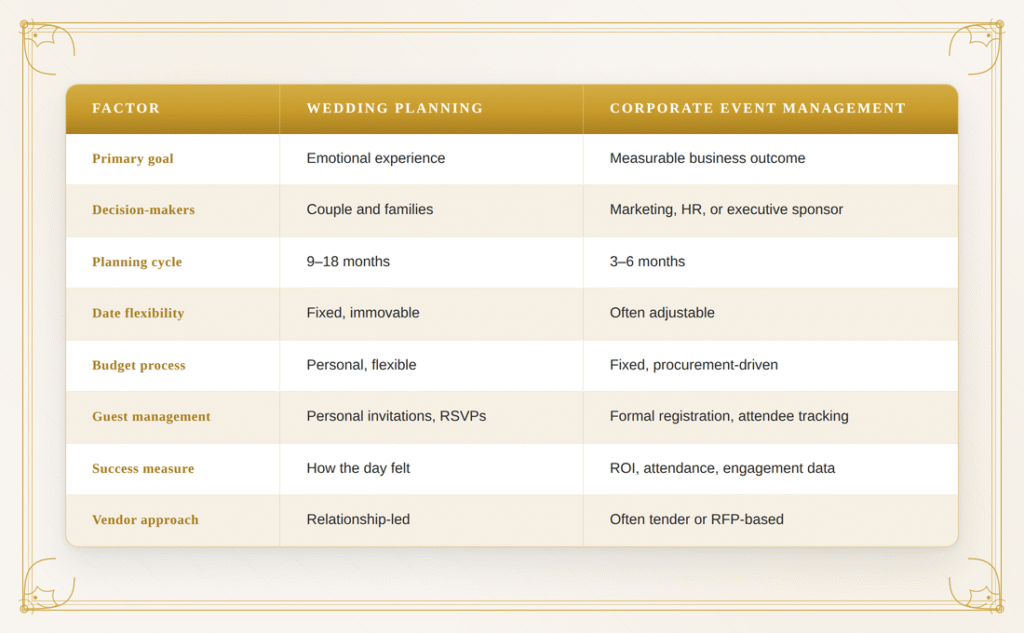
A corporate event exists to achieve a measurable business objective — generating leads, launching a product, training a team, or strengthening corporate bonding across departments. Success is judged against those objectives afterward.
A wedding exists to mark a personal milestone. There’s no KPI, no post-event report, and no measurable return — success is entirely about how the day felt for the couple and their families. A skilled wedding planner is optimizing for emotional experience; a corporate event planner is optimizing for business outcomes.
Who You’re Actually Planning For

The Decision-Maker Structure
In wedding planning, a marriage event management team typically navigates a small but emotionally invested group — the couple, both sets of parents, and sometimes extended family, all with strong personal opinions and no formal reporting structure. Decisions can shift based on sentiment, tradition, or family dynamics.
In corporate events, an event management company usually reports to a marketing lead, HR manager, or executive sponsor working within defined budgets, approval chains, and brand guidelines. Decisions move through process rather than emotion — slower to approve, but far more predictable once signed off.
The Attendee Relationship
Wedding guests are invited personally and attend out of relationship. Corporate attendees — whether at a conference, team building events session, or corporate retreats program — attend as part of their professional role. That changes everything about communication tone, registration process, and how you measure engagement.
Timeline and Planning Cycle Differences

- Wedding planning typically runs 9–18 months, with a single immovable date and a long emotional build-up. A wedding event planner works with the same clients over a long arc, often becoming a trusted confidant by the end.
- Corporate event planning often runs 3–6 months, sometimes less, with dates that can shift based on business priorities, executive availability, or market timing. A corporate event coordinator may manage several events simultaneously for the same client across a year.
Budget Structure and Approval

Wedding budgets are personal, flexible, and often emotionally negotiated — families may spend late in the process for something that matters to them. Wedding planning services frequently involve helping couples balance competing family priorities within a finite pot of money.
Corporate budgets are fixed, documented, and tied to procurement processes. An event planning company working on a corporate brief typically deals with formal RFPs, vendor approval lists, invoicing terms, and post-event cost reporting — a level of financial formality that rarely applies to weddings.
Logistics: Where the Disciplines Diverge Most
Skills That Transfer — and Skills That Don’t
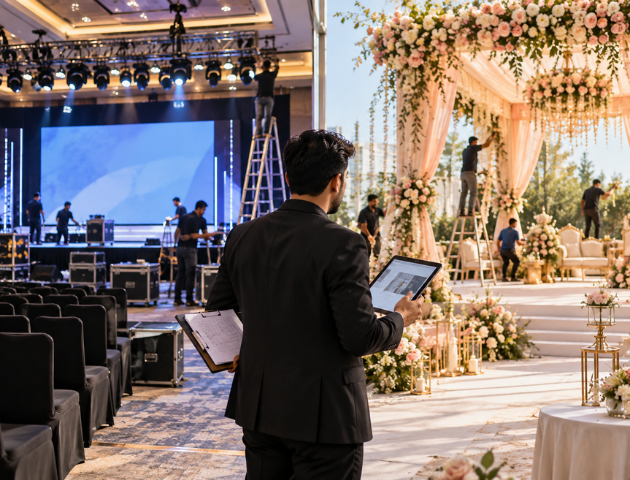
Plenty of core competencies overlap. Vendor negotiation, timeline management, contingency planning, and on-the-day coordination are equally essential in both wedding management and corporate event work. A strong wedding organiser and a strong corporate coordinator share the same fundamental operational discipline.
What doesn’t transfer as easily:
- Emotional navigation — managing family conflict, cultural traditions, and personal sentiment is central to a destination wedding planner’s job and largely absent from corporate work
- Brand compliance — corporate events require strict adherence to brand guidelines, messaging approval, and sometimes legal or regulatory sign-off
- Ritual and cultural fluency — a marriage event planner working on Indian weddings needs deep knowledge of multi-day functions, regional customs, and ritual sequencing
- Measurable reporting — corporate clients expect post-event analytics; wedding clients expect photographs and memories
Why Some Companies Handle Both Well

Agencies that manage both disciplines successfully tend to run them as separate practices with shared infrastructure — the same production capability, vendor network, and logistics expertise, but different client-facing teams who understand the distinct rhythms of each. According to industry analysis from Event Manager Blog, the operational backbone of event production translates well across formats; it’s the client relationship and success metrics that require genuinely different expertise.
Frequently Asked Questions
Can a wedding planner manage a corporate event?
Often yes, if they have genuine corporate experience. The operational skills transfer well, but corporate event management also requires comfort with procurement processes, brand guidelines, and outcome reporting that wedding work doesn’t typically involve.
Which is harder to plan — a wedding or a corporate event?
Neither is universally harder. Weddings involve more emotional complexity and zero date flexibility; corporate events involve more stakeholder approval layers and measurable accountability. They’re difficult in different ways.
Do corporate events and weddings use the same vendors?
Frequently, yes — venues, caterers, AV teams, and production crews often serve both markets. The difference lies in how they’re contracted and briefed rather than who they are.
What should I look for when hiring for a corporate event?
Look for a corporate event planner with demonstrable experience in your specific event type — a conference specialist and a team building events specialist bring quite different skill sets, even within corporate work.
Explore More from ConnectX Events
→ Our Services: Discover our full range of wedding and corporate event planning services
→ Get in Touch: Book a free consultation with our team
→ Read Next: How to Choose the Right Wedding Planner in India
Final Thoughts
Corporate event management and wedding planning share a toolkit but not a mindset. One is built around business outcomes, structured approvals, and measurable results; the other around emotion, family, and a single unrepeatable day. Understanding which discipline your event actually needs — and hiring someone with genuine depth in that specific area — matters far more than finding someone who simply claims to do both.
Found this useful? Share it with someone weighing up their event planning options.