Wedding Budget Allocation: How to Split Your Money Without Stress
Nobody enjoys talking about money before a wedding. Most couples learn the same lesson the hard way: a budget you don’t write down isn’t a budget. It’s a hope. Costs creep, someone adds twenty guests and suddenly the venue is using the money meant for photographs.
This post walks through how to set a wedding budget, split it across categories, track it and find savings that don’t show. The same approach works for corporate events and celebrations too. If you’re also sorting your look and details, our personal wedding ideas post pairs well with this one.
Related: Explore Our Full Wedding Planning Services
Start With One Number: Your Total Budget
Before looking at venues, answer one question: what’s my budget, honestly? Count what you and your partner can contribute, what families will add and what you’d rather not touch. Your personal budget for rent, bills and savings stays separate so treat the wedding fund as its own pot.
- Write down the total even if it’s a rough range.
- Note who is paying for what.
- Set aside a buffer before you divide anything.
- Agree on the three things that matter most to you both.
Budget Allocation: A Starting Split
Good budget allocation starts from priorities, not averages. The table below is a common starting point. Adjust it to match your wedding, then move percentages around until it reflects what you care about.
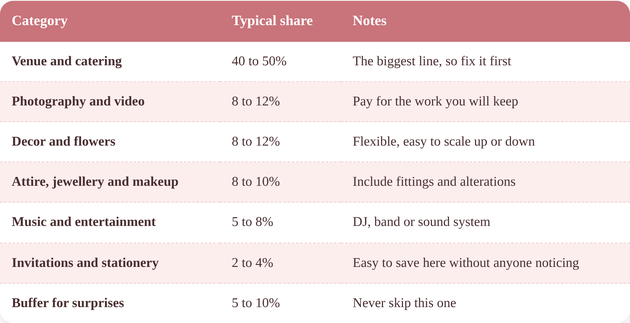

If you love photography, give that more and decor less. If food is everything, raise catering. The point of budget allocation is to make choices on purpose.
Budget Planner, Spreadsheet and Expense Tracker
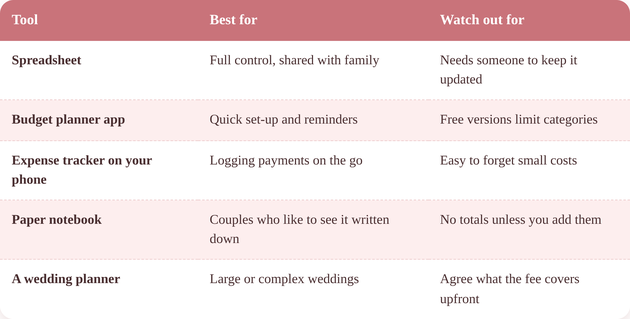
A budget planner only works if you actually open it. Pick whatever you will use every week. A shared budget spreadsheet works well for most couples: one column for estimated cost, one for actual, one for what’s paid and one for what’s still due. A separate expenses spreadsheet or expense tracker helps you log each payment as it happens.
Any budgeting tool is fine as long as it’s shared. Good budget management comes down to habit: update it weekly and check it before every vendor call.
Zero Budget Planning: Give Every Rupee a Job
A zero budget method, also called zero-based budgeting, means you assign every bit of money to a category until nothing is left unassigned. It works well for weddings because spare money tends to disappear into extras. Add the buffer as a category of its own.
Vendor Costs: What Moves the Price
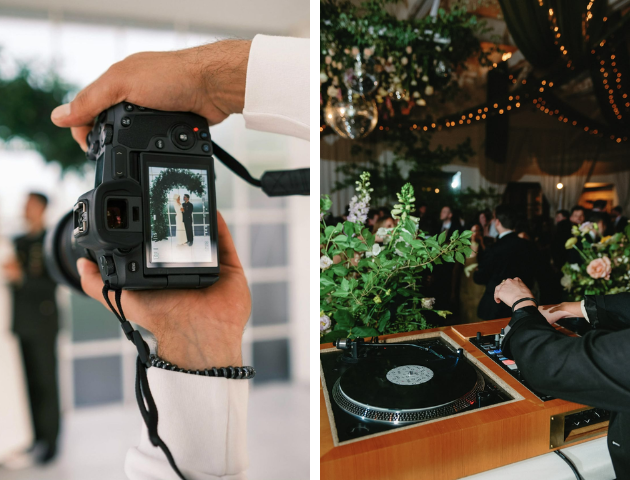
Vendor quotes feel random until you know what drives them. Wedding photographer cost depends on hours, team size and deliverables. Wedding DJ cost depends on hours, equipment and whether you want live musicians. Wedding makeup cost changes with the number of looks, trials and travel.
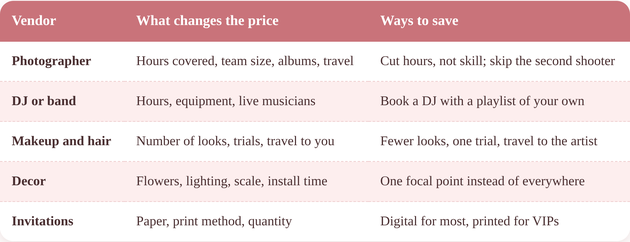
Always ask for an itemised quote and compare what’s included, not just the total. A lower price with fewer hours often costs more once you add them back.
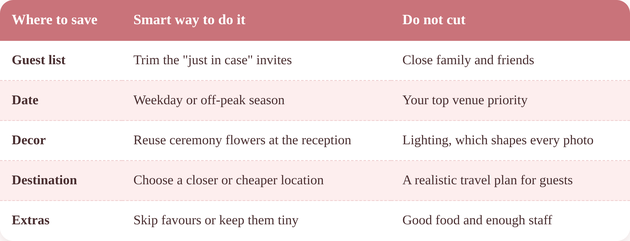
Where to Save Without It Looking Cheap
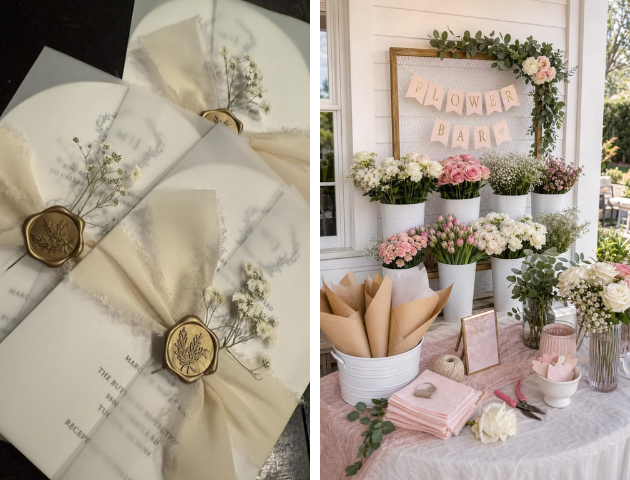
Guests rarely notice small savings but they always notice a long wait or cold food. Spend where it’s felt and save where it isn’t. Cheap wedding invitations can still look lovely: choose a clear layout, good wording and a digital version for most guests. For wording and timing, see our invitation and RSVP post.
If you’re dreaming of a beach or hills, cheap destination weddings do exist. A smaller guest list, an off-peak date and a place that’s easy to reach all help. Check what guests will pay for travel before you commit.
Budget Mistakes That Catch Couples Out
- Forgetting taxes, service charges and overtime
- Setting the guest list after the venue is booked
- Paying deposits without tracking the balance dates
- Spending the buffer on a nicer cake
- Letting several people hold the same spreadsheet

Working With a Wedding Planner on Your Budget
A good planner is partly a budget manager. At ConnectX Events and through our wedding brand Vivah by ConnectX, we start every plan with your total, build the split, track every payment and tell you early when something’s drifting. Our wedding catering post shows where much of the money usually goes.
FAQs: Wedding Budget Planning
How much should I spend on a wedding?
Spend what you can afford without debt. Start from your total then divide it across the big categories instead of guessing an average.
What should I spend the most on?
Whatever your guests and you will remember most. For many couples that’s food, venue and photography.
How do I track wedding expenses?
Use a shared budget spreadsheet or an expense tracker. Log every payment as soon as you make it with the due date for the next one.
How much should I keep as a buffer?
Five to ten percent of the total. Rentals, overtime and last minute guests always add up.
Is a destination wedding cheaper?
It can be, especially with fewer guests. Cheap destination weddings work when travel is easy and the location isn’t in peak season.
How do I lower wedding photographer cost?
Book fewer hours, choose a smaller package or skip the extra album. Don’t pick the cheapest person because you can’t redo the photos.
How can I get cheap wedding invitations?
Send digital invitations to most guests and print for family and VIPs. Simple designs with good wording look better than busy ones.
What do I do if I go over budget?
Review the biggest categories first. Reduce the guest list or the hours before cutting quality in key areas.
Is a wedding planner worth it for budget control?
Often, yes. A planner knows realistic prices, negotiates with vendors and stops small costs from piling up.
When should I set my wedding budget?
Before you book anything. The total decides your venue, guest list and every vendor you can afford.
Should I pay vendors in full upfront?
No. Pay a deposit, then pay in stages and keep every receipt and the date the next payment is due.
How do I stick to my wedding budget?
Check your spreadsheet before every booking and agree one spending limit per category. If one goes up, another comes down
Explore More from ConnectX Events
→ Our Services: Discover our wedding and event planning services
→ Get in Touch: Book a free consultation
→ Read Next: How to Create a Wedding That Feels Personal, Not Trend Copied
Final Thoughts: Spend on Purpose
Write the number down, split it by what matters and check it every week. A calm, honest budget doesn’t make a wedding smaller. It makes it yours, with no money stress the morning after.