Corporate Event Planning: A Step-by-Step Checklist
Most corporate events don’t go wrong on the day. They go wrong six weeks earlier, when nobody had decided who was booking the AV or how many people were really coming. Good event planning is mostly about doing the right things in the right order.
This post walks through a corporate event from the first idea to the final thank you, with a checklist you can follow whether it’s a team lunch or a two day conference. If you’re starting with the money, read our budget breakdown. The same split logic works for companies.
Related: Explore Our Corporate Event Services
Step 1: Set the Goal and the Strategy
Before anything else, write down why the event exists. A launch, a client thank you and a team celebration all need different strategies, so one sentence of purpose saves a lot of arguments later.
- What should guests think, feel or do afterwards?
- Who is the audience and how many people?
- How will you know it worked?
- What’s the budget and who signs off?
Step 2: Build the Timeline and the Team
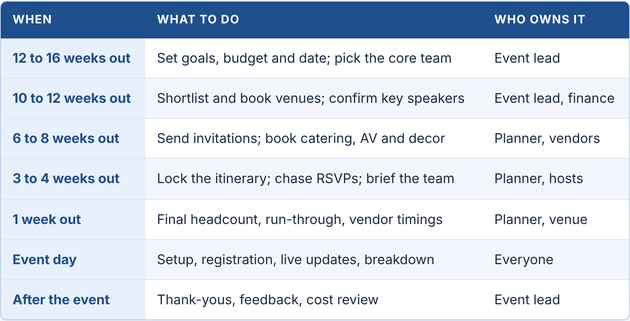
Choose one person who owns the event and name an owner for each task. Good planning is a calendar with names on it. Work backwards from your date using this timeline.

Step 3: Choose Your Venues
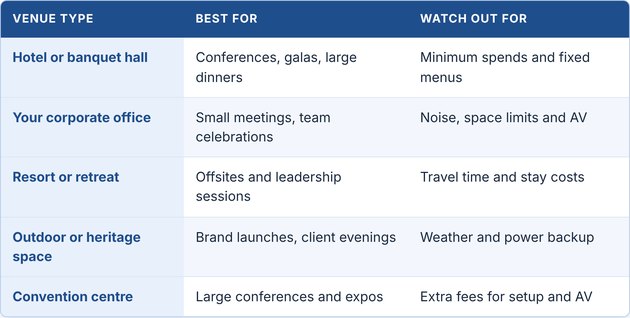
Compare at least three venues against headcount, location, transport and AV before you fall for one. Hidden costs hide in the details: setup fees, minimum spends, overtime and rules about outside vendors. Sometimes the best choice is your own corporate office, especially for small meetings and internal celebrations.
Step 4: Build the Itineraries
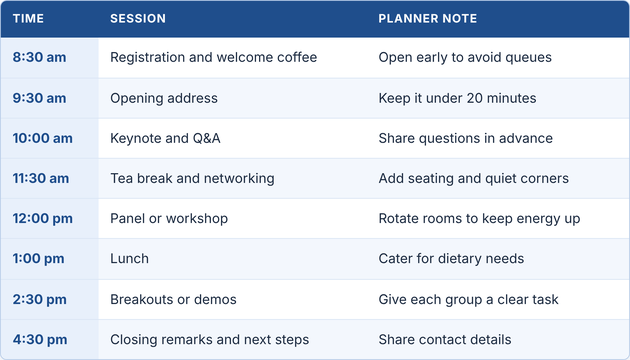
The itineraries are where the event becomes real. Start with the main moments, add breaks, then fill in the rest. For conferences, vary the format so attendees don’t spend eight hours in one chair. Here’s a sample day you can adapt.
Step 5: Book Vendors, Send Invitations, Plan Food
Once the venue and the itinerary are set, book catering, AV, decor and transport. Send invitations early and track every RSVP. Our posts on invitations and RSVPs and catering cover this in more detail. Plan food around the schedule, not the other way round.
Step 6: Managing an Event on the Day
Managing an event on the day is a job of its own, so don’t give it to the person who’s also giving the speech. Run through these before doors open:
- Walk the venue with the planner and the venue manager.
- Test microphones, screens and the internet.
- Brief the team on roles, timings and who to call.
- Set up registration and signage.
- Keep a printed itinerary and a backup plan for bad weather or a missing speaker.

Step 7: Follow Up and Learn
The event isn’t over when the venue empties. Send thank-yous within a few days, ask for feedback while it’s fresh and review costs against the budget. Incorporating that feedback into the next event is how good events get better. Share a short summary with your leadership, including what worked and what you’d change.
Planning Different Types of Corporate Events
The steps stay the same, but the focus shifts depending on the event.


Do You Need a Corporate Event Planner?
You can run a small event in-house. For larger ones, a corporate event planner saves time, knows the market and handles the many moving parts. Whether you call them an event organizer or hire event management companies, compare what each includes. Searching for event planners near me will give you a long list, so use these questions to narrow it down:
- Have you run events like ours before?
- Who will actually be on site on the day?
- What’s in the quote and what costs extra?
- How do you handle changes and emergencies?
, 
Find Corporate Event Support: How We Help at MICE by ConnectX
At MICE by ConnectX, we plan conferences, launches, offsites, awards and celebration events. We build the strategy, shortlist venues, manage vendors, run the itinerary and handle the day itself so your team can enjoy the event too.
FAQs: Corporate Event Planning
How far ahead should I plan a corporate event?
Twelve to sixteen weeks for large events, six to eight for smaller ones. Book venues and key speakers first, because they go quickly.
What is a corporate event?
Any event run by or for a company: conferences, launches, team offsites, client evenings, awards and celebration events.
What should a corporate event checklist include?
Goals, budget, venue, guest list, itinerary, vendors, invitations, staff roles, a day-of schedule and a follow-up plan.
How do I choose a venue for a corporate event?
Start with headcount, location and access. Then check AV, parking, catering rules and what the venue charges beyond the hire fee.
Do I need a corporate event planner?
Not for every event. A planner helps most when you have large numbers, multiple vendors or a tight timeline.
Do we need permits or licences for a corporate event?
Often yes for outdoor, large or music events. Ask your venue and local authorities early, and book music licences if needed.
How do I find event planners near me?
Ask for referrals, check reviews and look at past work. Meet two or three, compare itemised proposals and ask who will actually run your event.
What do event management companies do?
They handle strategy, venues, vendors, budget, logistics and on-site management so your team can focus on the event itself.
What is the difference between an event organizer and an event planner?
The terms overlap. Many use organisers for hands-on logistics and planners for the full job, so check what’s included.
How do I keep a conference engaging?
Mix formats, keep sessions short, add breaks and give attendees a way to ask questions. Don’t let any session run past its slot.
How do I plan a corporate event on a tight budget?
Cut the guest list or the days before cutting quality. Use your corporate office or a simple venue and limit extras like branded gifts.
What if a speaker cancels at the last minute?
Always have a backup, such as an internal speaker, a panel or a pre-recorded session. Tell attendees early and update the itinerary.
How do I measure whether a corporate event worked?
Compare results to the goals you set. Check attendance, feedback, leads or follow-up meetings, then review costs against the budget.
Explore More from ConnectX Events
→ Our Services: Discover our corporate event planning services
→ Get in Touch: Book a free consultation
→ Read Next: Corporate Event Management vs. Wedding Planning
Final Thoughts: Plan Early, Assign Clearly
A good corporate event feels easy to the people attending, and that takes careful work behind the scenes. Set a clear goal, name an owner for every task and leave room for the unexpected. If you’d like help, our team can take it from the first brief to the last follow-up.