How to Style Wedding Tables for a Luxury Wedding
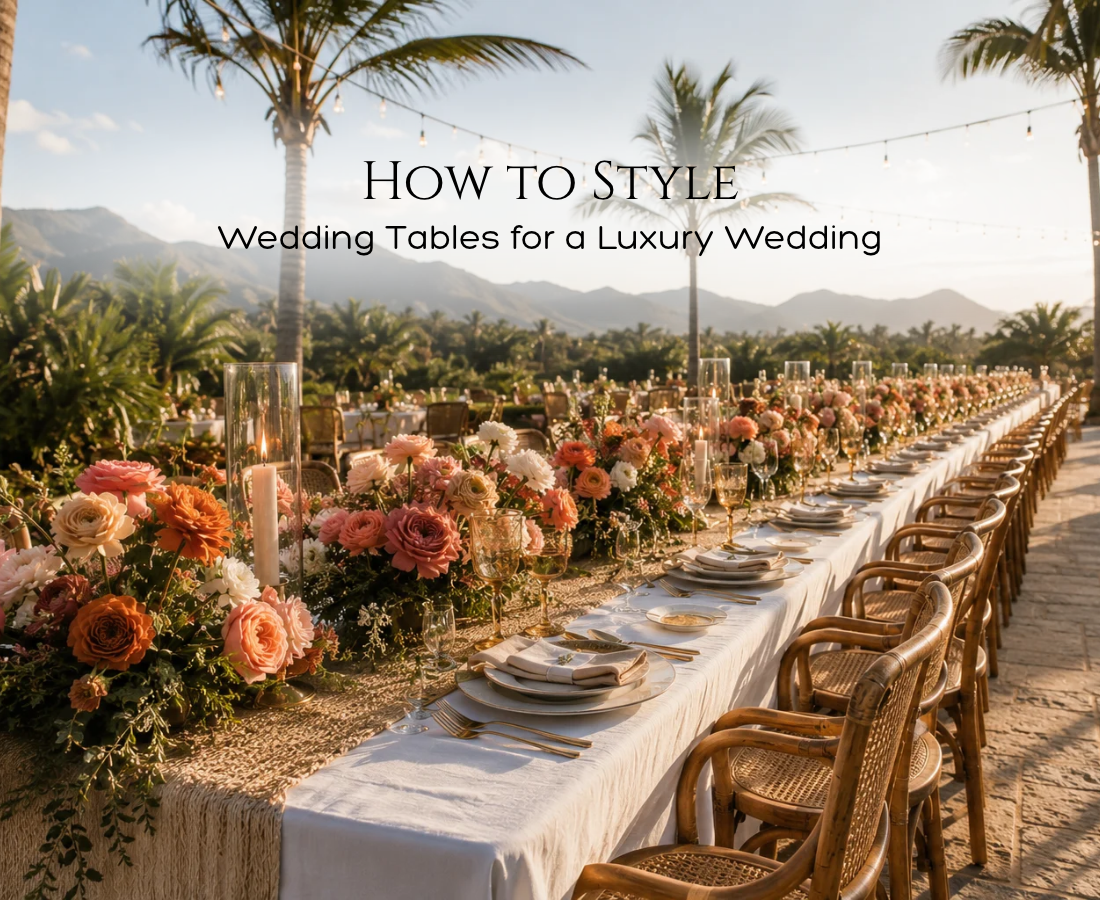
Guests spend more time at their wedding table than almost anywhere else in the venue — which makes it one of the highest-impact, most photographed details of the entire celebration, and one of the easiest to underestimate. A well-styled table doesn’t just look good in photos; it shapes how guests experience the meal, the evening, and the overall feel of your wedding. This guide walks through exactly how to style a wedding table for a genuinely luxury look, from centerpieces to linens to the small details that tie everything together.
Related: Explore Our Full Wedding Planning Services
Why Wedding Table Styling Deserves Real Attention
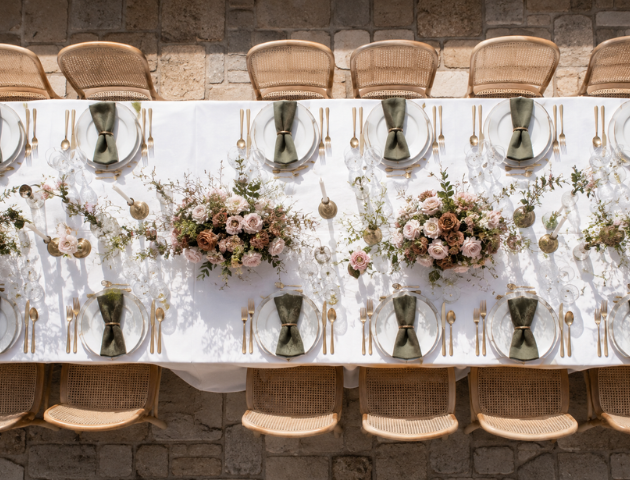
A wedding reception table is where your color palette, florals, and overall design language all come together in one compact, close-up view — which means small styling mistakes are far more visible here than they are across a large room. Getting your wedding table decorations right is often what separates a wedding that looks professionally styled from one that simply looks decorated.
Choosing the Right Wedding Table Shape and Layout
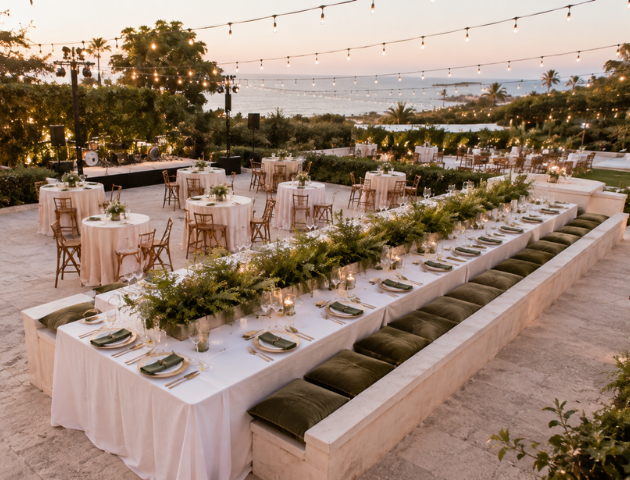
Before centerpieces or linens, the shape of your tables sets the tone for the entire room.
- Round wedding tables encourage conversation and are the most common choice for wedding reception table decorations, since they allow every guest a clear sightline to each other and to the stage
- Long banquet-style tables create a more editorial, family-style feel, often favoured for intimate or destination weddings where a shared communal atmosphere feels more personal than individual round tables
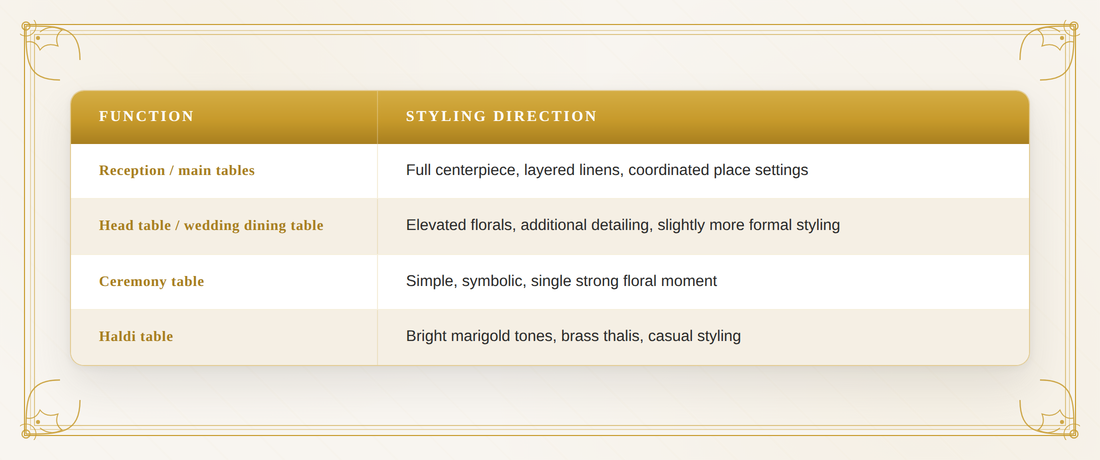
- A wedding dining table for the couple or head table is often styled slightly differently from guest tables — typically with a more elevated centerpiece or additional floral detailing, since it becomes the visual anchor of the room
Building the Perfect Centerpiece
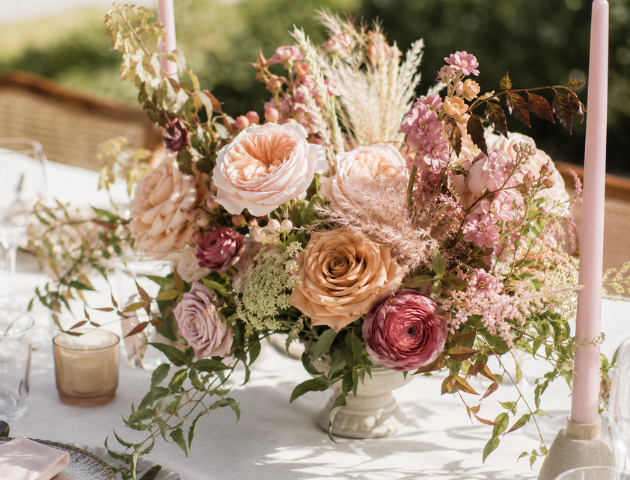
Wedding centerpieces are the single most important element on any table, and the best ones balance height, colour, and scale against the rest of the room.
Floral Centerpieces
Floral table decor remains the most popular centerpiece choice, and for good reason — fresh flowers add colour, texture, and a sense of occasion that’s hard to replicate with other materials. Flower table centrepieces work best when they’re scaled to the table size: tall, dramatic arrangements suit larger round tables with more surface area, while low, compact arrangements work better for smaller or more intimate table settings where guests need to see each other across the table.
Non-Floral and Mixed Centerpieces
Not every center piece for a wedding needs to be built entirely from flowers. Candles, greenery, fruit, or decorative objects like brass urlis and lanterns can be layered with a smaller floral element for a centerpiece that feels rich without relying on flowers alone — often a smart way to manage decor budgets across a large number of tables.
Layering Linens, Place Settings, and Details
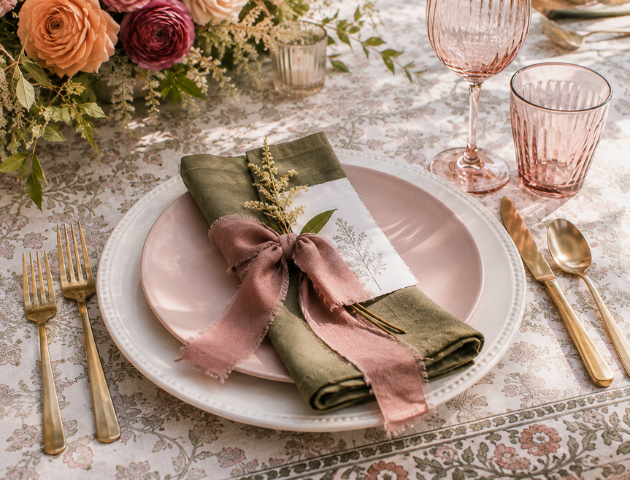
Once your centerpiece direction is set, the rest of your wedding table decorations should support it rather than compete with it:
- Base linen — choose a tablecloth colour that complements your overall wedding color palette rather than matching it exactly, which keeps the table from feeling flat
- Table runner or overlay — adds texture and a secondary colour layer, particularly useful for round tables where a runner draws the eye toward the centerpiece
- Place settings — chargers, napkin folds, and place cards should echo your centerpiece’s colour story in small doses
- Glassware and cutlery — gold, brass, or matte black flatware can shift the entire tone of a table without touching the florals at all
Styling Tables for Different Wedding Functions
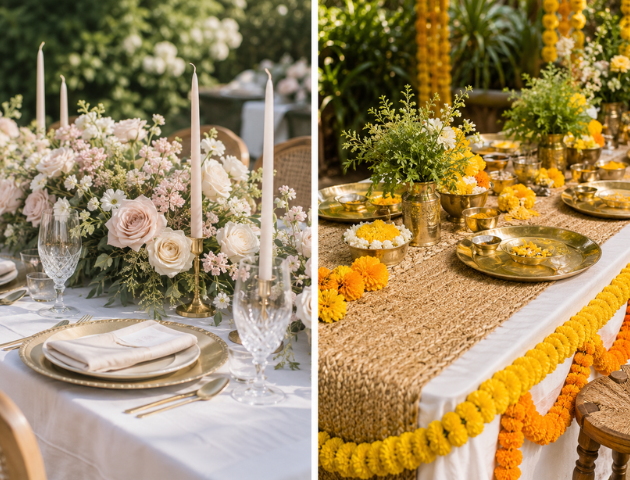
Not every function needs the same table treatment. A wedding ceremony table decorations setup — for signing tables, ritual items, or gifting displays — is typically simpler and more symbolic than a full reception table, often built around a single strong floral moment rather than a full multi-layer setup. Haldi table decorations, by contrast, lean into brighter marigold tones and more casual styling, often using brass thalis, fresh turmeric, and marigold garlands rather than the more refined florals used at the reception.
Common Wedding Table Styling Mistakes
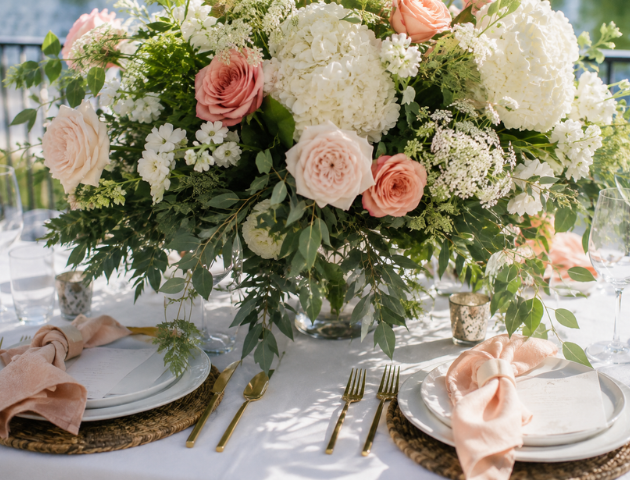
- Overcrowding the table with a centerpiece too large for the number of place settings
- Choosing linens that clash with, rather than support, the room’s overall color palette
- Ignoring guest sightlines — tall centerpieces without a slim, view-through structure can block conversation across the table
- Treating every table identically regardless of its role — head tables, family tables, and general guest tables can each carry slightly different detailing without breaking visual consistency
According to styling guidance from The Knot, centerpieces that sit either below eye level or well above it (on a raised stand) tend to photograph and function better than mid-height arrangements that obstruct sightlines across the table — a detail worth discussing directly with your florist.
Quick Reference: Table Styling by Function
Frequently Asked Questions About Wedding Table Styling
What’s the best centerpiece height for round wedding tables?
Either low and compact (below eye level) or tall on a slim stand (well above eye level) tends to work best for round wedding tables, since mid-height arrangements often block guest sightlines across the table.
How much should I budget for wedding centerpieces?
This depends heavily on scale and floral choice, but mixing a smaller floral element with non-floral details like candles, greenery, or brass objects is a reliable way to manage cost across a large number of center pieces for wedding without compromising on visual impact.
Should every table at my wedding look the same?
Not necessarily. Many couples style their head table or wedding dining table slightly more elaborately than general guest tables, while keeping the same overall colour and material language across the room for consistency.
How is haldi table styling different from reception table styling?
Haldi table decorations are typically brighter, simpler, and more traditional — think marigold garlands and brass thalis — compared to the more layered, refined florals used for wedding reception table decorations.
Explore More from ConnectX Events
→ Our Services: Discover our full range of luxury wedding and event planning services
→ Get in Touch: Book a free consultation with our wedding planning team
→ Read Next: Wedding Color Palette Ideas to Match Your Venue
Final Thoughts
A beautifully styled wedding table is where every other design decision in your wedding — color palette, florals, overall theme — gets translated into something guests actually sit down and experience up close. Whether you’re planning an elaborate multi-layer centerpiece or keeping things intentionally simple, consistency between your tables and the rest of your venue’s styling is what makes the whole room feel considered rather than assembled.
Found this guide helpful? Share it with a couple still deciding on their table styling.