Luxury Wedding Decor Trends in India- What Couples Are Choosing
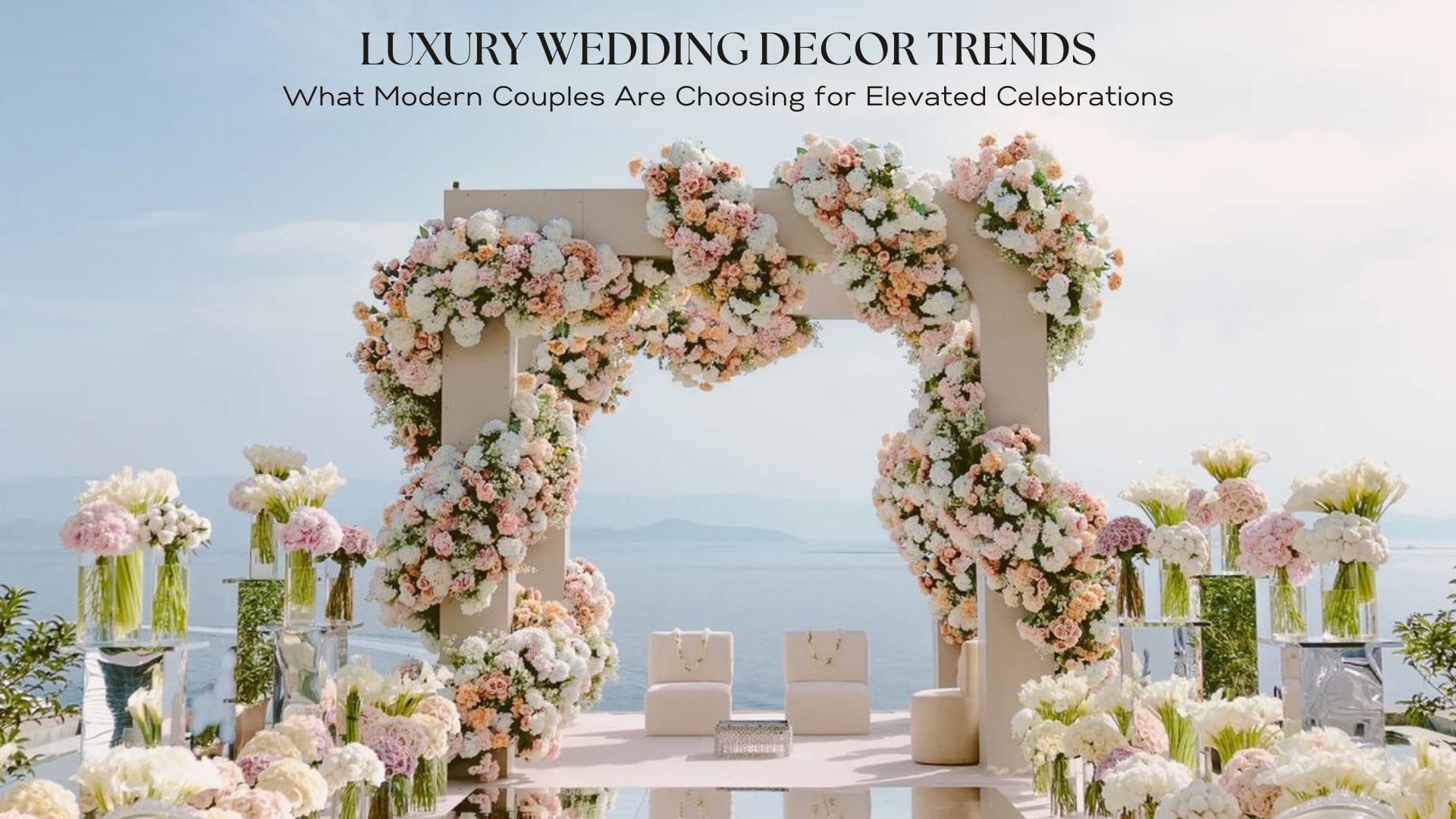
Indian weddings in 2026 are no longer just about how they look – they’re about how they feel. Walk into any luxury wedding celebration today, and you will notice something has fundamentally shifted. The air is different. The spaces breathe differently. The experience is more curated, more considered, and more deeply personal than anything we saw even three years ago. This is the new era of luxury Indian weddings – and it is rewriting every rule in the wedding décor playbook.
The shift is clear: from excessive décor to intentional design, from “bigger is better” to more meaningful, more personal, more immersive. Today’s couples aren’t asking for grand setups – they’re asking for spaces that reflect their story, their aesthetic, and the kind of experience they want to create for their guests. They want their wedding to feel like them. And that is a profoundly different brief to work with.
India’s luxury wedding market has never been more sophisticated. As destination weddings in Rajasthan, Goa, Kerala, and Udaipur continue to attract high-net-worth couples from across India and the Indian diaspora, wedding planners and décor designers are being pushed to deliver experiences that are not just Instagrammable but genuinely transformative. The best weddings of 2026 are not being talked about because of how they were photographed – they are being talked about because of how they felt to be present in.
Here is a deep dive into the luxury wedding décor trends defining India in 2026 — and why each one matters far beyond its aesthetic appeal.
1. Elevated Minimalism – Luxury Through Restraint
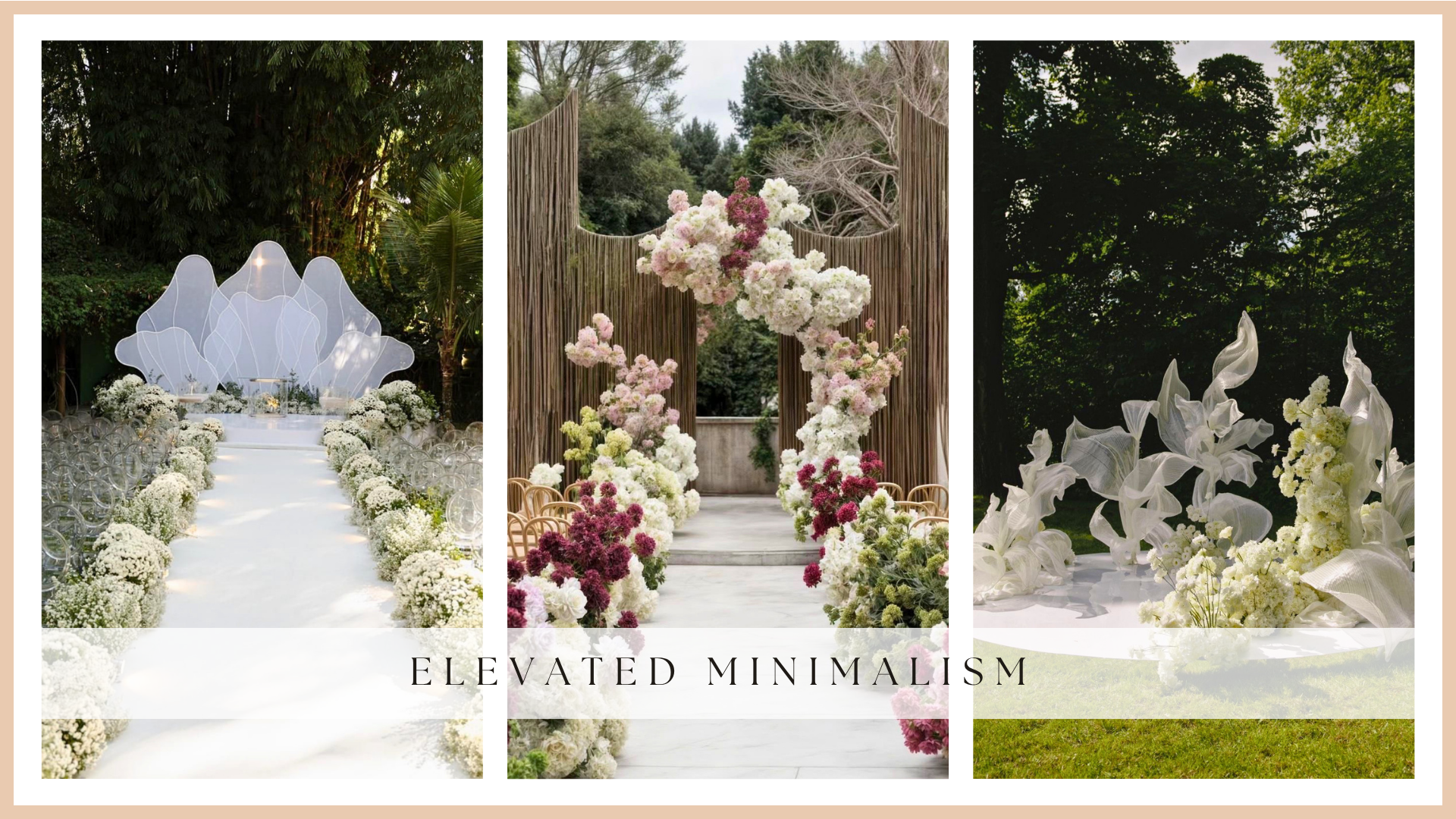
The era of excess is over. In its place has come something far more refined: elevated minimalism. This is not the cold, stark minimalism of a gallery wall – it is warm, considered, and deeply intentional. India’s most discerning couples in 2026 are choosing to do less, but to do it with extraordinary precision, and the results are breathtaking.
Where wedding décor once competed for attention – more flowers, more draping, more lighting rigs, more everything – elevated minimalism asks a different question entirely: what does this space actually need to feel its most beautiful? The answer, more often than not, is restraint—a single material used consistently throughout a venue. One hero colour pulled from the bride’s lehenga and echoed in the table linen, the floral stems, and the candle wax. A mandap so architecturally pure it needs no embellishment beyond the couple standing within it.
This shift is also deeply practical for today’s luxury wedding client. Elevated minimalism is not a budget compromise – it is a design philosophy that demands higher quality at every single touchpoint. When there is less to look at, everything you do look at has to be perfect. The flowers are rarer. The fabrics are finer. The furniture is bespoke. The result is a wedding that feels expensive in the truest sense – not loud, but undeniable.
2. Nature-Led Design & Earthy Palette
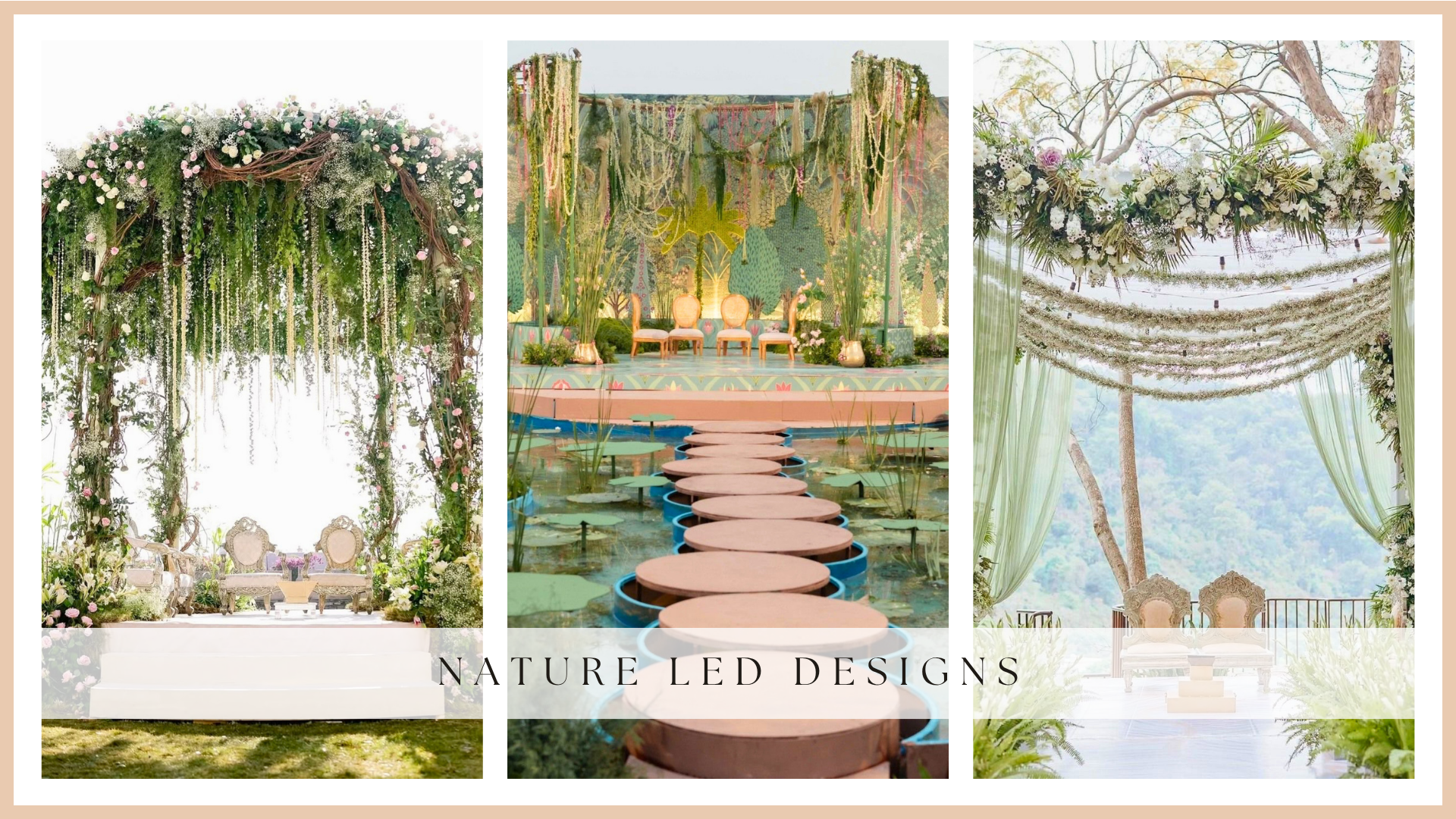
Gone are the days of loud reds and heavy golds dominating every function. While these colours will always hold a place of cultural significance in the Indian wedding lexicon, 2026 has ushered in a quieter, more considered palette – one that draws its inspiration not from tradition alone, but from the living, breathing world outside the venue doors.
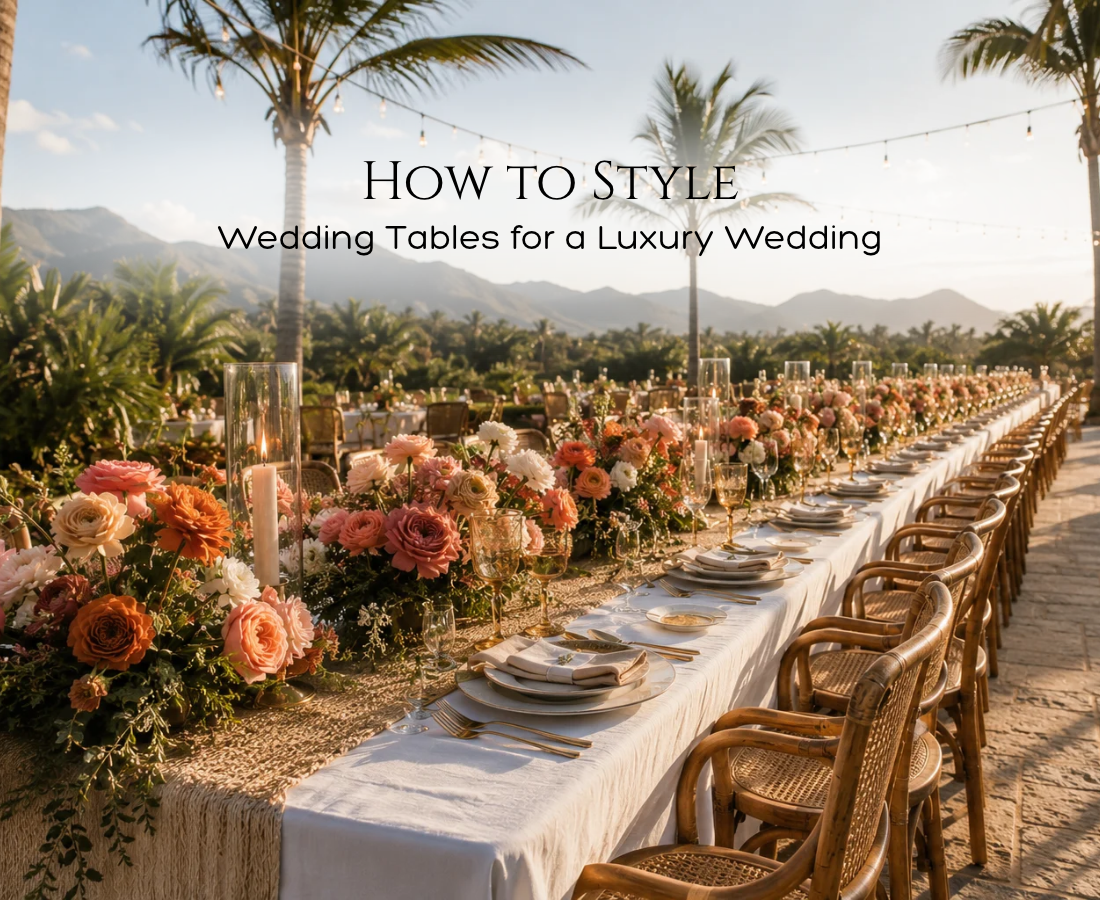
Sage green, muted terracotta, champagne ivory, dusty blue, warm sandstone, and sun-bleached ochre are the colours defining India’s most beautiful weddings this year. These are not muted colours – they are alive. They shift with the light. They deepen at dusk and glow at dawn. They make the people within them look extraordinary. And crucially, they do not fight with the landscape – they belong to it.
Natural materials follow the same logic. Linen, raw wood, river stone, hand-woven jute, unglazed terracotta, and weathered brass are replacing synthetic draping and resin installations as the materials of choice for luxury wedding designers across India. There is an honesty to these textures – a tactility that guests can feel when they run their hand across a table setting or look up at a ceiling draped in undyed cotton. This is not décor that is trying to be something it is not. It is a décor that is completely confident in itself.
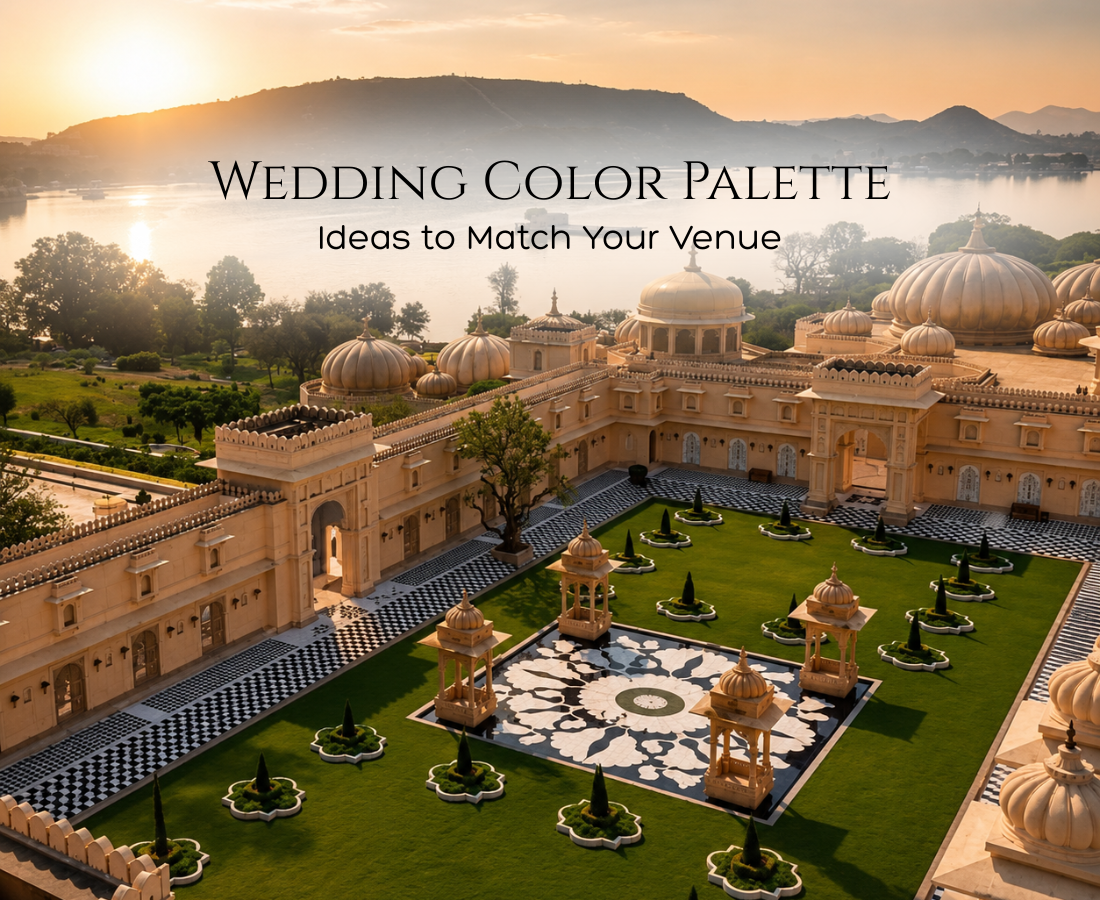
For destination weddings in particular – in Rajasthan’s sun-baked landscapes, Goa’s coastal light, or Kerala’s lush green backwaters – nature-led design creates a seamless dialogue between the celebration and its setting. When the terracotta tones of your centrepieces mirror the walls of the haveli behind them, when the sage linen on your tables echoes the paddy fields stretching to the horizon, the wedding stops being an event placed in a location and becomes something far more powerful: an experience that could only have happened in that exact place, on that exact day.
3. Sculptural Florals, Not Floral Overload
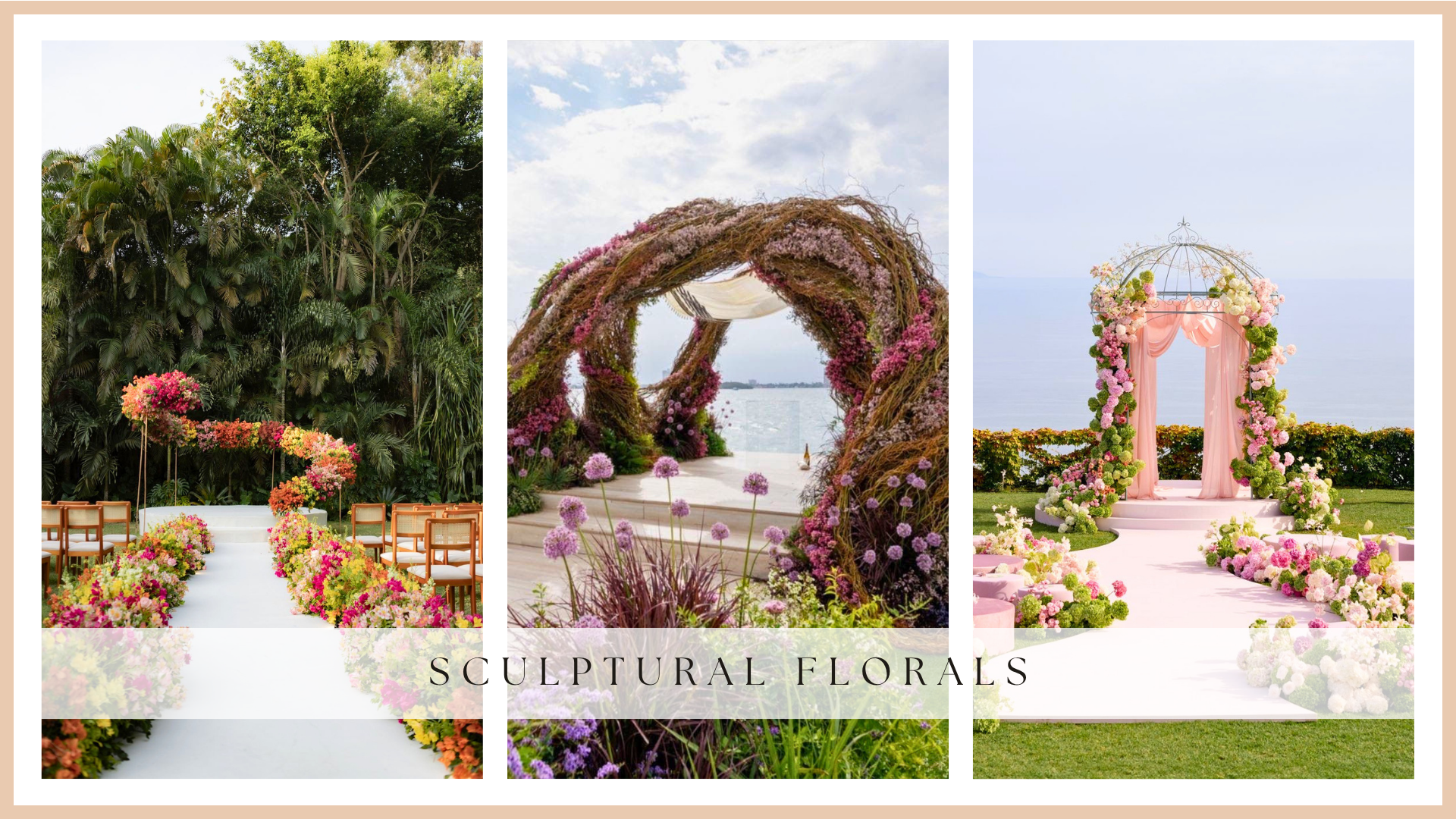
Florals are no longer fillers – they are art installations. The dense flower wall, the symmetrical arch packed from base to tip, the reception table buried under blooms – these are the hallmarks of a wedding aesthetic that 2026 has quietly, decisively left behind. In their place has arrived something altogether more considered: sculpted florals, where every stem is placed with purpose, and the design is driven by form, movement, and negative space rather than sheer volume.
Today’s most celebrated wedding floral designers in India are thinking less like decorators and more like sculptors. An asymmetrical arch that sweeps dramatically to one side, heavy with a single variety of bloom and deliberately bare on the other, creates far more visual tension and emotion than a perfectly symmetrical structure ever could. A floating floral cloud suspended above a dining table – loose, organic, slightly wild – stops guests in their tracks not because of how much there is, but because of how it moves in the air around it. A mono-floral statement piece, built entirely from one flower in one tone, becomes an exercise in restraint that paradoxically feels more opulent than a mixed arrangement three times its size.
The focus, in every case, is on the relationship between the flowers and the space around them. Where does the eye travel? What does the light do when it passes through? What does a single stem of white tuberose mean when it stands alone in a hand-thrown ceramic vessel on an otherwise bare table? It means everything. That is the power of sculpted floral design – it gives flowers back their meaning, one carefully chosen bloom at a time.
For couples, this approach also unlocks a more personal conversation with their floral designer. Choosing a mono-floral palette – all marigold, all garden rose, all orchid – becomes an expression of identity. It says something about who you are. And a wedding that says something about who you are is, in 2026, the only kind worth having.
4. Statement Mandaps as Design Centrepieces
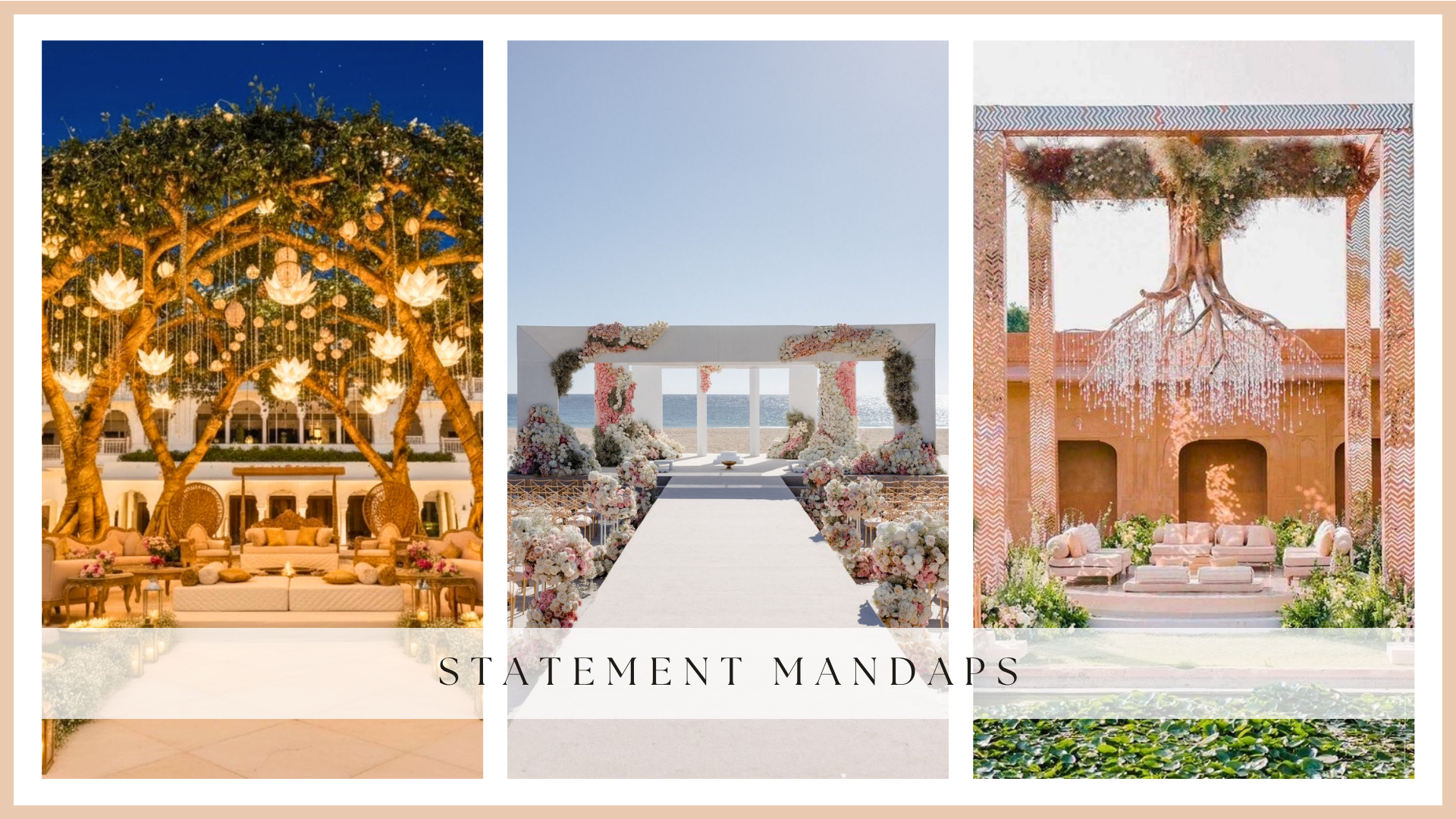
The mandap is no longer just a ritual structure – it is the hero of the entire wedding design. For generations, the mandap was built around function: four pillars, a canopy, flowers, and fabric. Sacred, yes. Beautiful, often. But in 2026, India’s most visionary wedding designers have elevated the mandap into something that commands the room from the moment guests arrive – an architectural statement so considered, so editorial, so completely intentional that it renders everything else in the venue secondary.
Today’s statement mandaps are being conceived like fashion editorials and built like architectural installations. Layered arches in clean geometric forms create depth and drama without clutter. Stone textures – raw travertine, carved sandstone, polished marble – bring a sense of permanence and gravitas that fabric alone could never achieve. Metallic accents in burnished gold, aged brass, and oxidised copper catch the light and shift through an evening in ways that keep the structure feeling alive and dynamic from the first ritual to the last. And clean silhouettes – unencumbered by excessive draping or floral overload – ensure that the mandap photographs beautifully from every single angle, whether it is framed in a wide editorial shot or captured in an intimate close-up.
The most remarkable mandaps of 2026 are also the ones most deeply rooted in their cultural context. Geometry drawn from Mughal architecture. Arches inspired by the carved doorways of Chettinad mansions. Proportions borrowed from temple gopurams. The best designers are not abandoning tradition – they are distilling it, finding its essential geometric and spiritual grammar and expressing it in a contemporary visual language that feels both timeless and entirely of this moment.
When a mandap is designed this way, it stops being a backdrop and becomes the story itself. The couple seated within it are not performing a ritual in front of a decorated structure – they are at the centre of a living, breathing work of art. And that, in 2026, is exactly where they deserve to be.
5. Lighting Becomes the Main Character
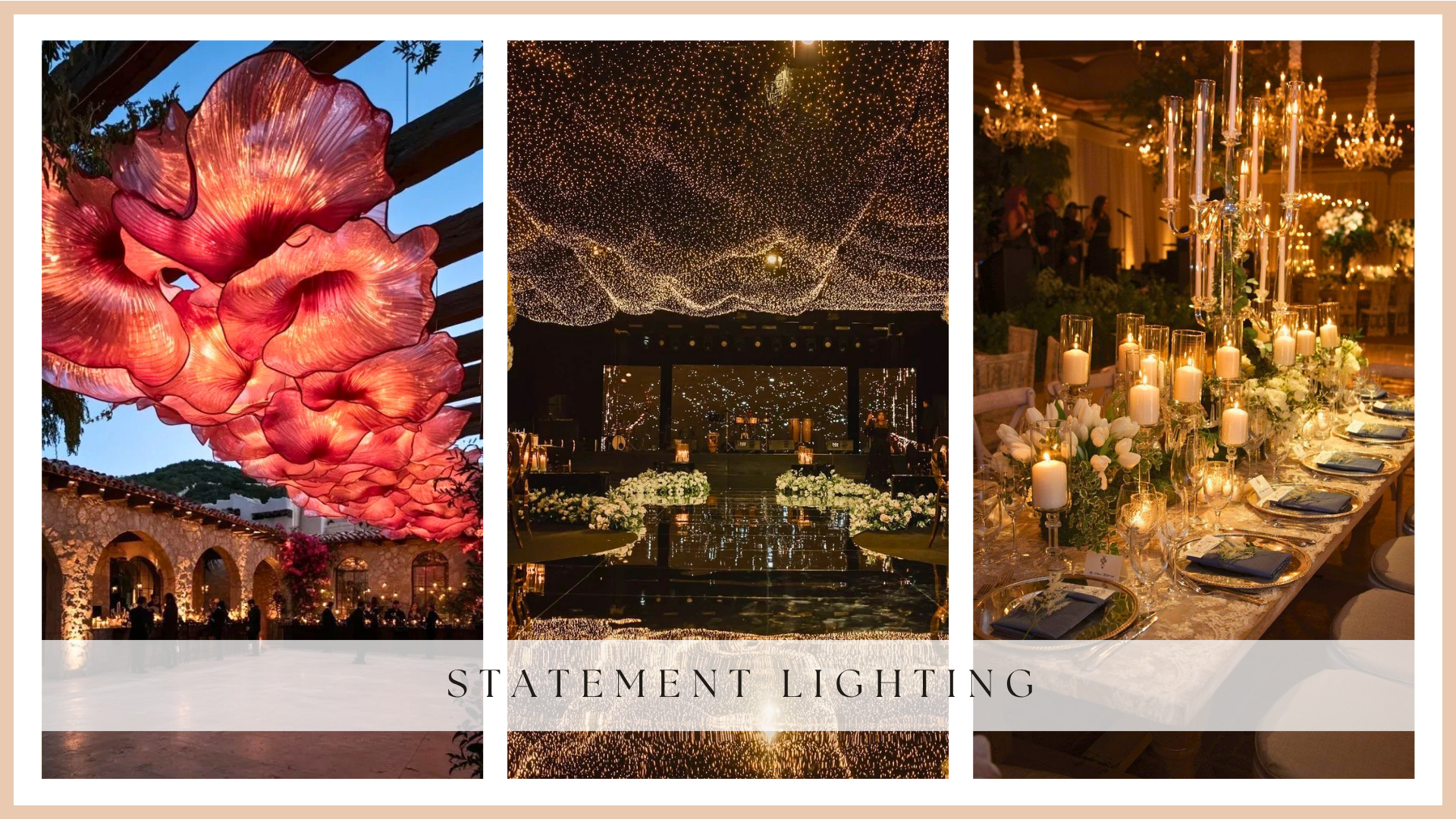
If there is one element defining Indian weddings in 2026, it is lighting. Not as an afterthought – but as the most transformative tool in a wedding designer’s arsenal. The right lighting can make the simplest setup feel cinematic and luxurious. The wrong lighting can undo even the most generous décor budget.
Today’s luxury wedding planners in India are briefing lighting designers at the very start of the creative process, not the end. Because lighting is not finishing – it is the foundation.
For pheras and ceremony spaces, the mood is soft, warm, and reverent. Gentle amber washes, flickering candlelight at the mandap, subtle uplighting that draws the eye without flooding the space. The goal is not illumination – it is atmosphere.
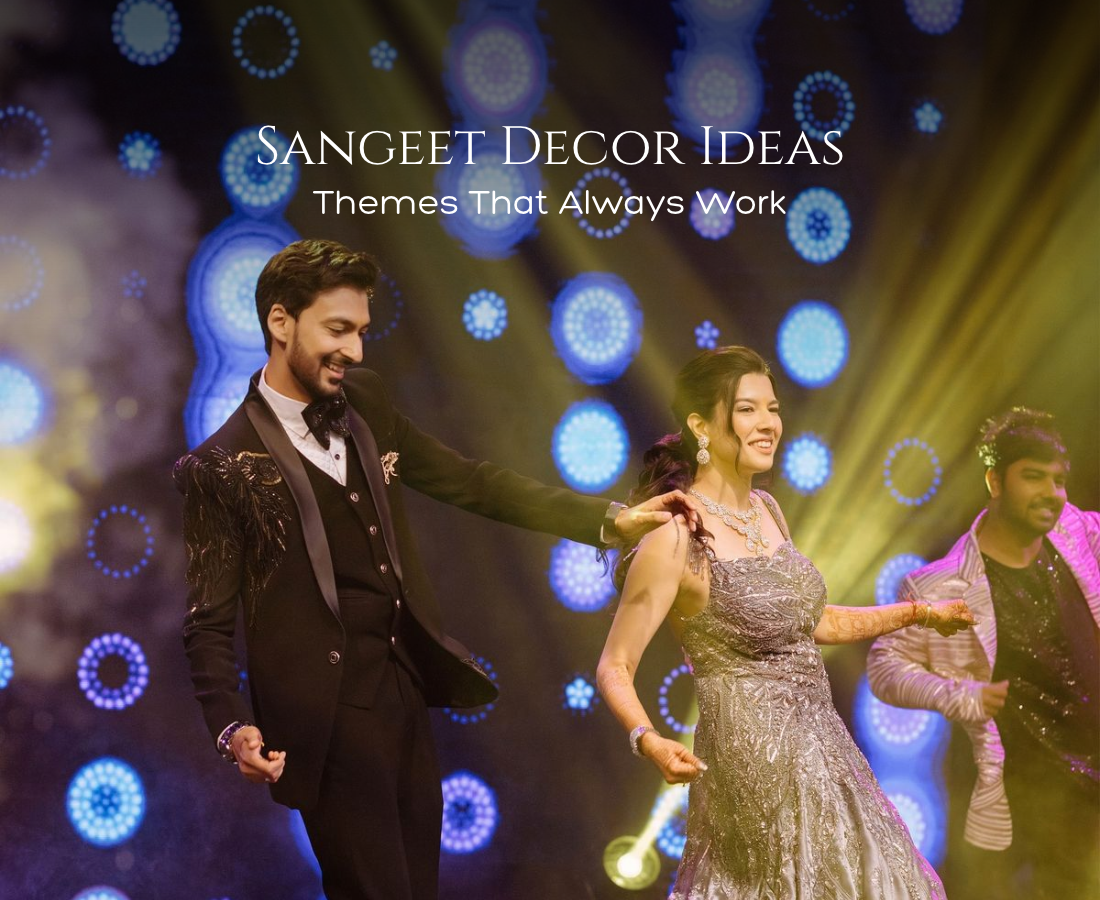
For cocktail nights and receptions, the language shifts entirely. Layered, dramatic, architectural – light and shadow used to define zones, build energy, and create a visual journey that carries guests from arrival through to the dance floor.
The era of flat, uniform brightness is over. Great wedding lighting design in India in 2026 is about contrast, intention, and emotion. It is the one element no guest will consciously notice – and the one every guest will deeply feel.
6. Experience-Led Decor (Not Just Visual)
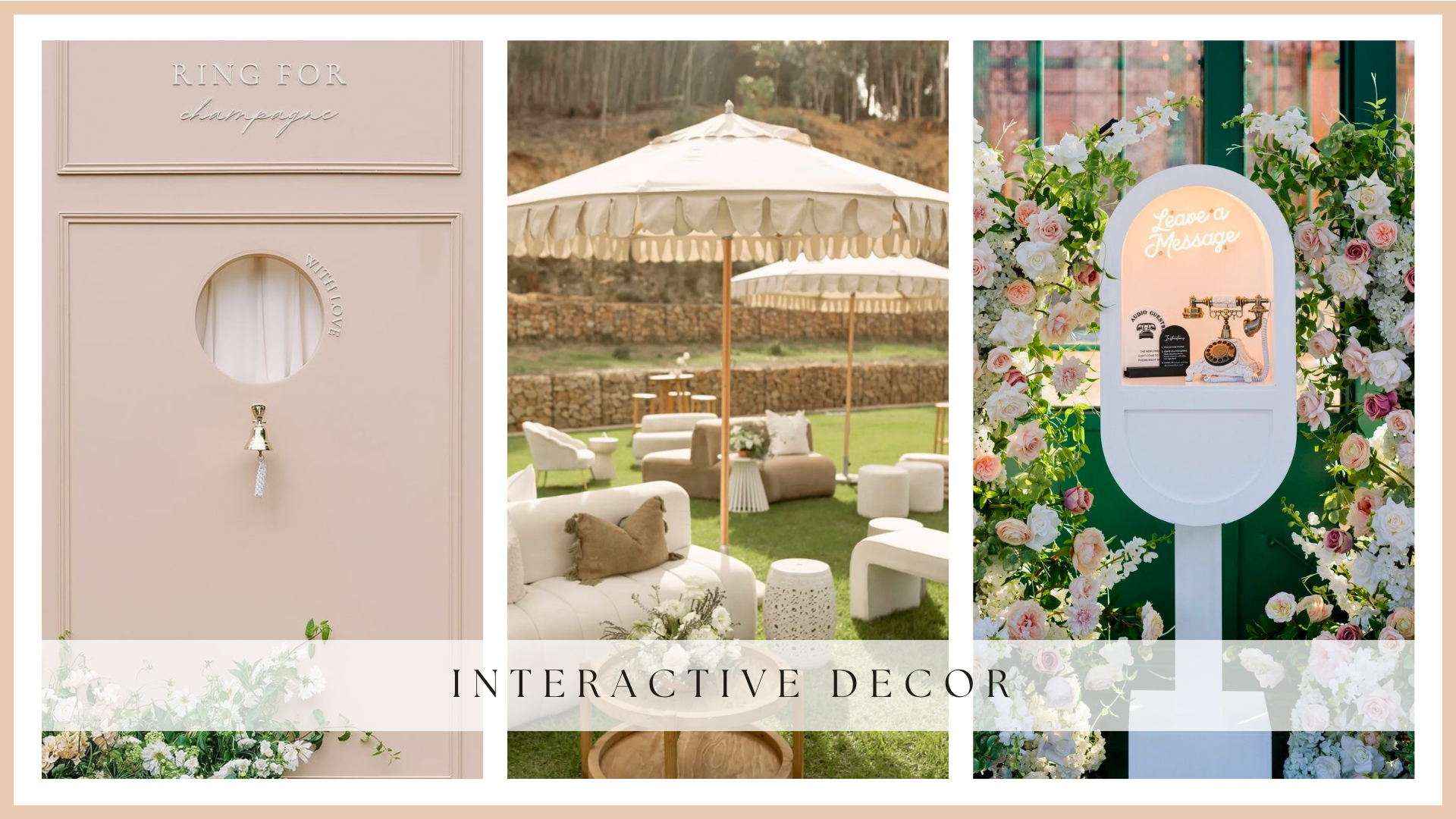
The most significant shift in Indian wedding design in 2026 is not about what weddings look like – it is about how they feel to move through. Décor is no longer static. It is interactive, immersive, and designed to be lived in rather than simply admired. Today’s luxury wedding guests are not the audience. They are participants.
India’s most forward-thinking wedding designers are now approaching each function as a multi-sensory environment. Walk-through floral installations that guests journey through on arrival, each turn revealing a new texture, scent, or moment of surprise. Styled lounge zones that feel like curated interiors – a velvet seating corner lit by a single hanging lantern, a draped terrace with floor cushions and trailing jasmine – giving guests spaces to inhabit rather than just occupy. Interactive photo corners that go far beyond the tired backdrop-and-props formula, instead offering genuinely beautiful, architecturally considered setups that guests actually want to step into.
Then there is live food as décor – one of the most talked-about trends in the Indian luxury wedding market right now. Live chaat counters styled as street scenes, fresh flower-garnished dessert tables that double as centrepieces, open fire cooking stations that fill the air with warmth and aroma. Food is no longer served from a separate catering area – it is woven into the design of the space itself, becoming part of the visual and sensory story.
What drives all of this is a simple but powerful insight: guests remember how a wedding made them feel, not how it looked in photographs. A beautifully styled lounge that made them linger. An installation that genuinely surprised them. A scent that stopped them mid-conversation. These are the moments that define a great wedding in 2026 – and they all begin with a designer who understands that the most luxurious thing a wedding can offer its guests is not grandeur, but genuine experience.
7. Personalised Storytelling Through Decor
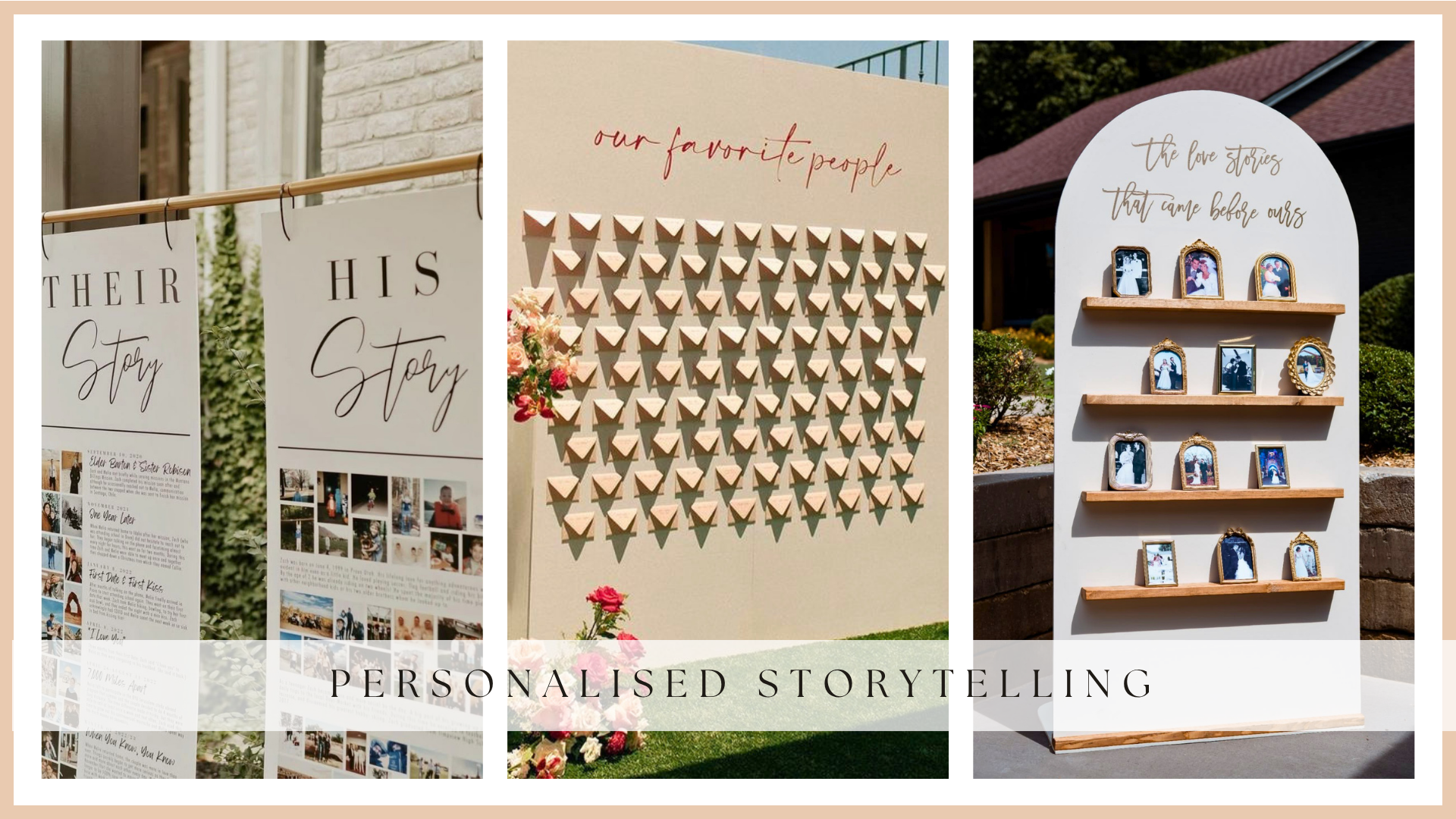
This is the biggest shift defining Indian weddings in 2026 – and it changes everything. Couples no longer want a beautiful wedding. They want their wedding. Not a template, not a trend, not a recreation of something saved on Pinterest. A celebration so deeply, unmistakably them that every guest walks in and immediately feels the personality of the people behind it.
Personalised wedding décor in India has moved far beyond monograms and welcome boards. Couples are now building full visual narratives – relationship timelines unspooling across a venue, custom motifs drawn from shared interests and family heritage woven through every function, personal symbols carried consistently from the mehendi all the way through to the reception. The wedding stops feeling like a series of separate events and starts feeling like a single, cohesive story told across multiple chapters.
The magic is often in the smallest details. A centrepiece built around flowers from the city where they first met. Seating areas named after places that matter. Hand-illustrated menus that reference a moment only their closest friends will understand. None of these things is expensive. All of them are irreplaceable.
Weddings in 2026 are becoming living narratives – and the couples who embrace personalised storytelling are creating celebrations that feel less like events and more like the most beautiful exhibition of a love story ever staged.
8. Texture Over Shine
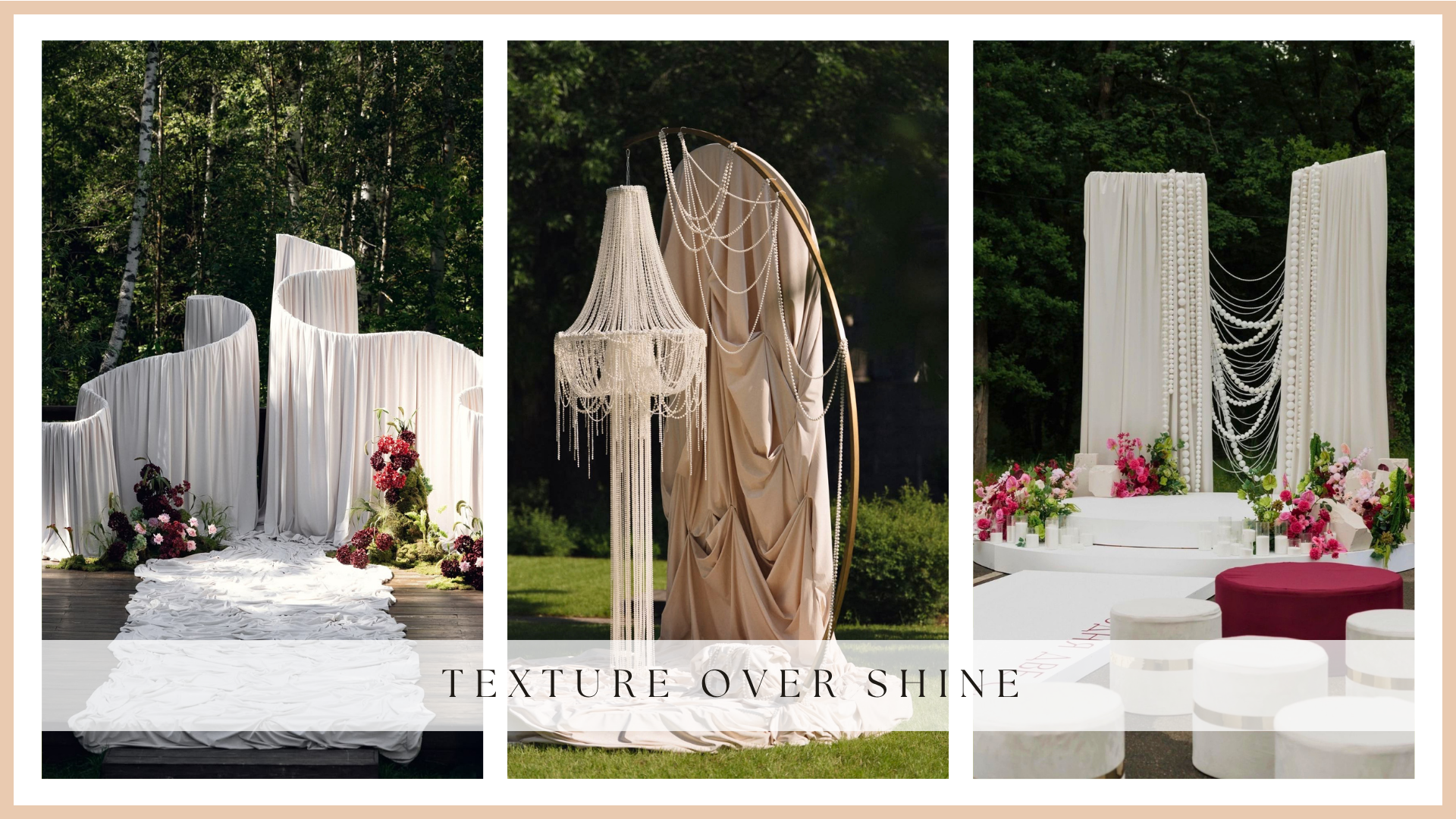
Glossy, mirror-heavy décor is slowly fading from India’s luxury wedding landscape – and what is replacing it is far more interesting. In 2026, the most sophisticated wedding aesthetics are built not on shine but on depth, tactility, and material richness. Luxury now lies in how something feels, not just how it catches the light.
Raw silk draped loosely over a mandap frame. Linen table runners with a natural, undone edge. Pearl accents scattered across a tablescape rather than plastered across every surface. Unglazed ceramics, weathered brass, hand-thrown clay vessels, woven grass – materials that invite you to reach out and touch them, that look different up close than they do from across the room, that reveal their quality slowly rather than announcing it immediately. This is the new grammar of luxury Indian wedding décor, and it is rewriting what opulence looks like entirely.
The shift is also deeply connected to the rise of nature-led design and elevated minimalism in Indian weddings. When your colour palette is earthy, and your design philosophy is restrained, texture becomes the primary tool for creating visual interest and warmth. A table set entirely in champagne ivory feels flat without it. Add raw silk, a linen runner, a cluster of pearl-toned blooms and an unglazed candle holder – suddenly it breathes.
For couples planning a luxury wedding in India in 2026, investing in textural richness is one of the most impactful décor decisions available. It photographs beautifully, it ages gracefully through an evening, and it creates the kind of quiet, confident elegance that no amount of mirror or gloss can replicate.
Final Thoughts
The biggest wedding décor trend of 2026 isn’t a colour, a flower, or a style. It’s intentionality.
India’s luxury wedding landscape is undergoing its most meaningful evolution in a generation. Couples planning their weddings today are not asking for more – more flowers, more lights, more grandeur. They are asking for better. More considered. More personal. More real. And the designers, planners, and creatives rising to meet that brief are producing some of the most beautiful wedding experiences this country has ever seen.
From elevated minimalism and nature-led colour palettes to sculpted florals, statement mandaps, and deeply personalised storytelling – the throughline connecting every major Indian wedding trend in 2026 is the same. Every detail has meaning. Every space has a purpose. Every moment feels curated rather than assembled.
Because today, luxury Indian weddings are no longer defined by scale. They are defined by soul. The grandest thing a wedding can offer its guests in 2026 is not a spectacle – it is the unmistakable sense that every single element of the day was chosen with care, with intention, and with love.
That is the new standard. And for couples, planners, and designers working in India’s luxury wedding market, it is the most exciting standard this industry has ever set.
Because luxury isn’t about doing more. It’s about doing it right.
Planning your wedding in 2026? We help you design décor that’s not just beautiful – but deeply personal, intentional, and unforgettable.
Reach us directly at 7888456678 or visit connectxevents.com to get in touch.
ConnectX Events | Luxury Wedding Planning | Mumbai and Destinations Across India
Tags: Indian wedding trends 2026, luxury wedding décor India, wedding design ideas India, destination wedding India, intimate wedding India, luxury shaadi, wedding planning India, mandap design 2026, Indian wedding aesthetics, best wedding designers India, personalised wedding décor, experiential wedding design, wedding colour palette 2026, Indian bridal décor trends